Designing the wait
By Alejandro Marco7 min read
When a product needs time, that time is still part of the product.
There is a sensible order to product work. First, understand what someone needs. Make the important path work. Make it reliable, accessible, and clear. Remove unnecessary delay. None of the details that make an experience memorable can compensate for a product that fails at its job.
But there is a moment, once the foundation is there, when it is worth stopping and asking a different question: what does using this thing feel like?
I think that question matters more as software becomes easier to generate. AI gives more people the ability to build, but it also creates a strong pull toward the same defaults: the same prompt box, the same cards, the same gradient, the same handful of loading states. A product can be technically different and still feel strangely familiar.
Function is the starting point. Experience is where a product begins to become itself.
Useful, but with a point of view
Physical products make this easy to see. A well-designed object does not add character after solving the functional problem; its character often emerges through the way that problem is solved.
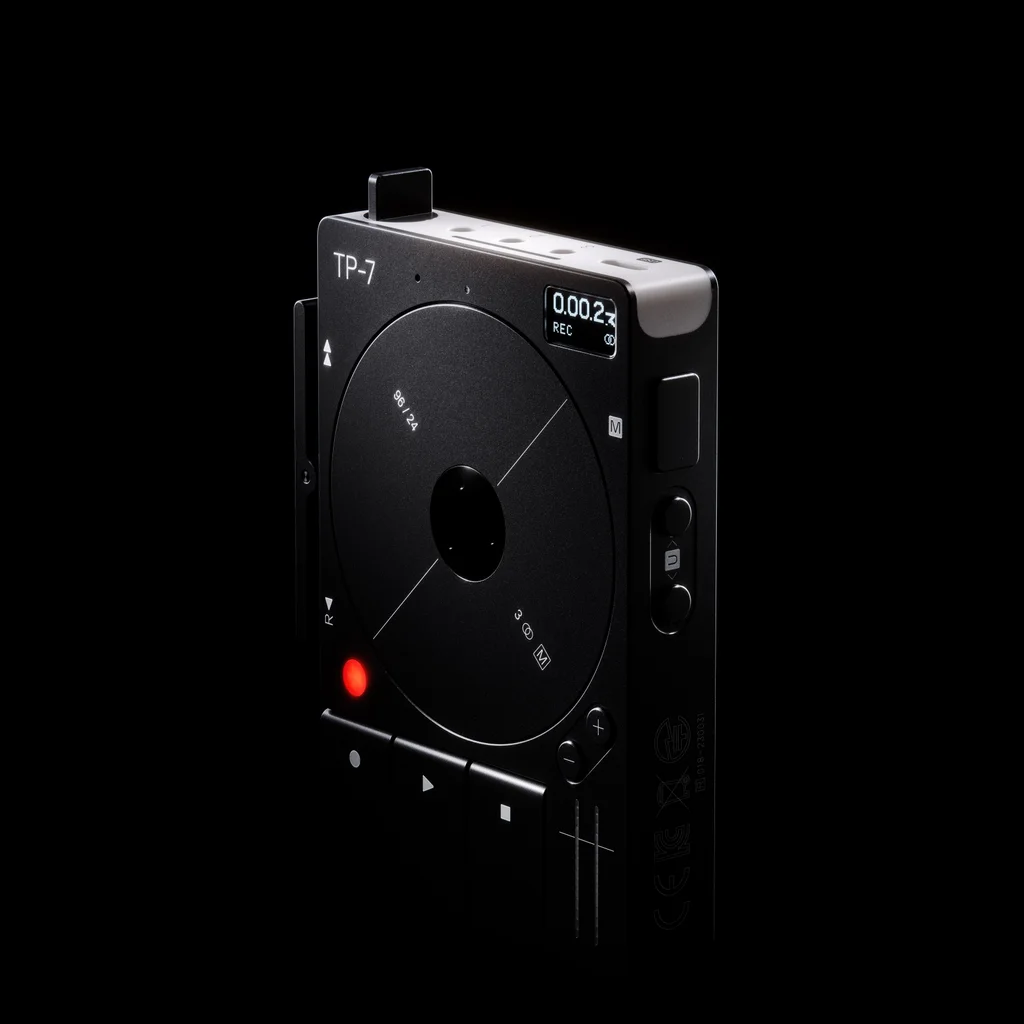
Teenage Engineering is particularly good at this. Its products are serious tools, but their controls, constraints, colors, sounds, and tiny displays make exploration feel inviting. A reel on the TP–7 turns as audio moves. The interaction explains the object and gives it personality at the same time.
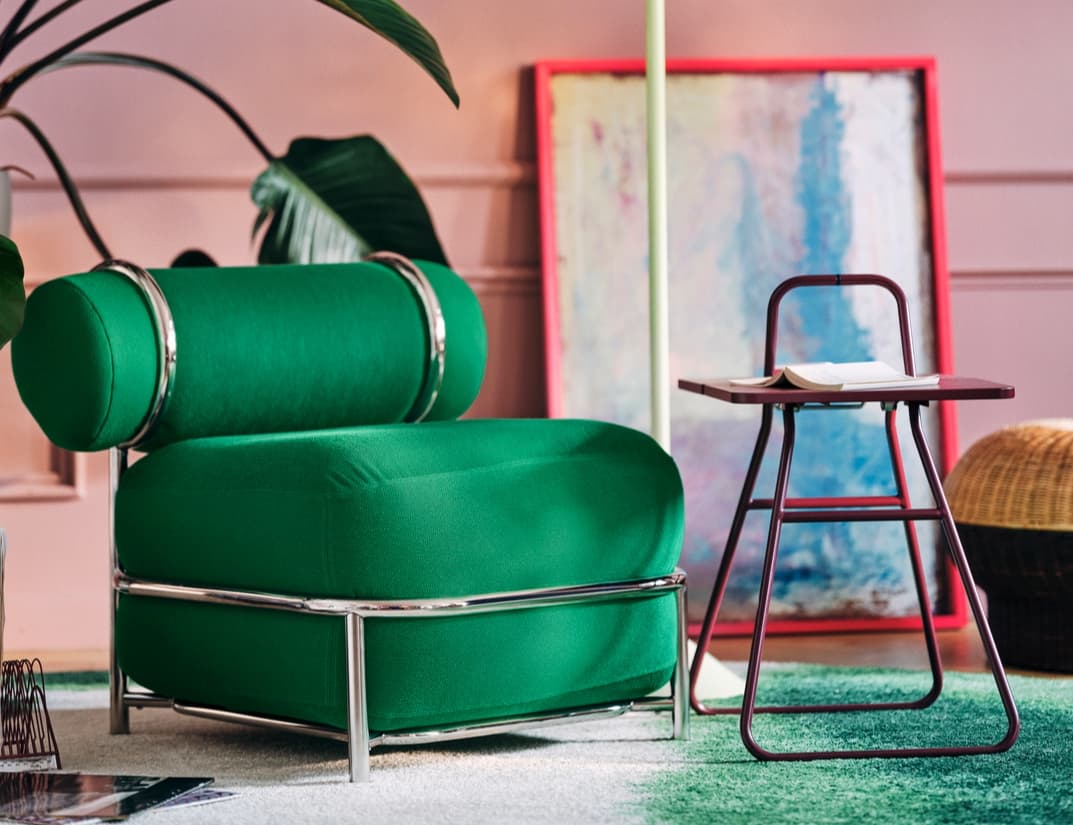
IKEA can do something similar at a completely different scale and price. Its PS 2026 collection describes the idea as “playful functionality”: useful objects with unexpected details that reveal themselves through use. A chair, table, or clock still has to perform its ordinary job. The play is not an excuse to forget the job. It is a way of giving the job a point of view.
Digital products have fewer material constraints, but that does not mean they should be without materiality. Motion, sound, language, timing, and interaction are materials too. They can make the system easier to understand, and they can make the time spent with it feel particular.
AI makes waiting visible again
Waiting has always been a design problem. We have progress bars, skeleton screens, optimistic updates, and background jobs because networks and computers take time. Sometimes the best solution is simply to remove the wait or let the work happen elsewhere.
Generative products make the problem harder to hide. A useful result may take seconds or minutes. The duration can be uncertain. The process may have real stages, and the user has often just contributed something personal before the waiting begins.
A spinner says that the interface has not frozen. It does not say much else.
The Chrome dinosaur is a small, famous counterexample. Losing a connection is still a failure, and the game does not pretend otherwise. It simply gives a frustrating empty moment a little character. The Chrome team turned the offline page into an endless runner in 2014: a literal joke about returning to the prehistoric age without Wi-Fi.
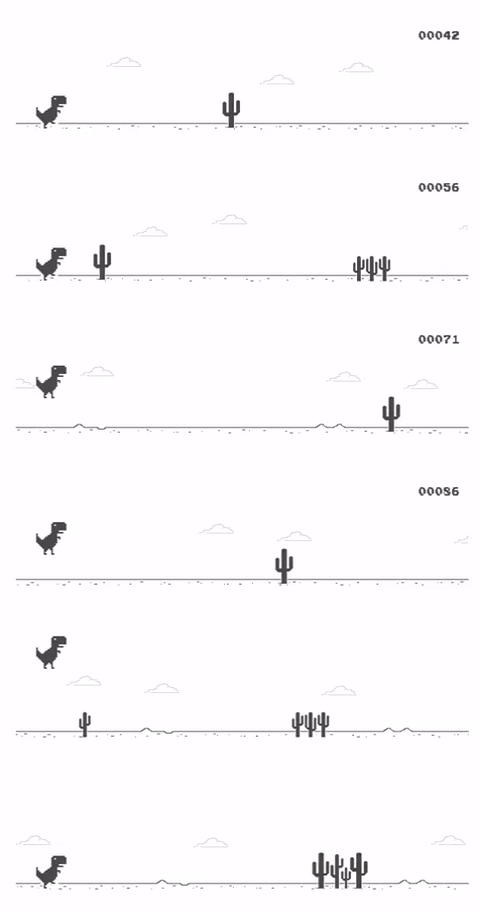
I like the modesty of that idea. It does not claim that every wait needs a minigame. It shows that an awkward system moment can still be designed.
A waiting room for Imagibo
I met this problem while working on Imagibo, a product for creating deeply personalized children’s books. After someone describes the child, the characters, the world, and the heart of the story, Imagibo needs time to create a preview. The story structure, title, synopsis, character portraits, cover, and first illustrated scenes do not all appear at once.
The straightforward solution would have been a progress bar with a sequence of status messages. That would communicate activity, but it would leave the most interesting thing hidden: a book is actually taking shape.
My first sketch was loose. A status at the top, then pieces of the book entering a full-screen space: the title, synopsis, character images, cover, and whatever else was ready. I wanted the generation to become visible without turning the page into a technical log. I also wanted the pieces to feel like objects rather than rows in a checklist.
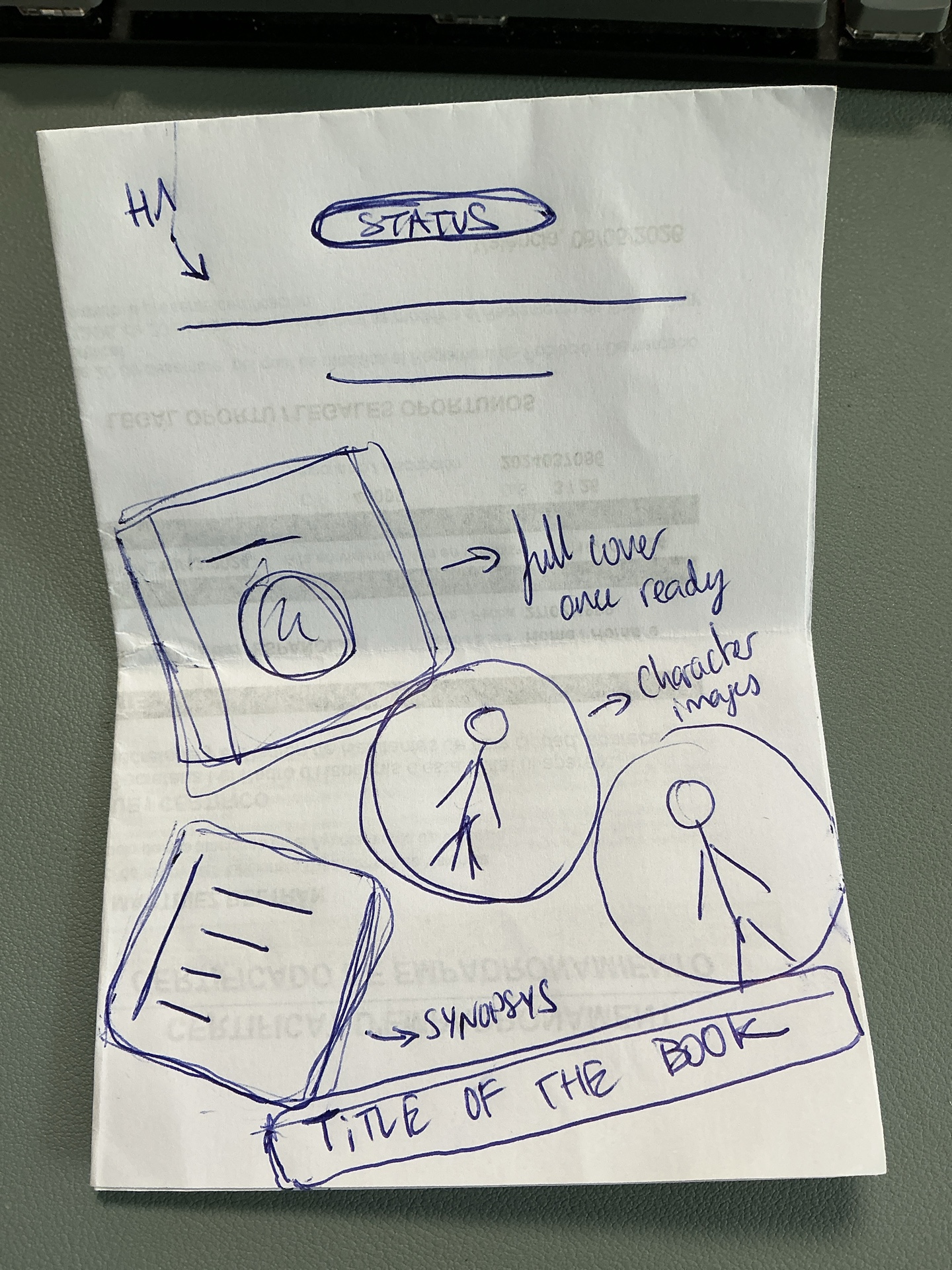
The implemented version takes that idea further. Each artifact is server-rendered HTML and appears only when that part of the book really exists. Then Matter.js gives it a body. Tiles fall under gravity, collide, stack, and settle. They can be picked up and thrown. A double click or double tap enlarges one while the surrounding pieces make room.
The interaction is playful, but it is not detached from the work. The growing pile is also the progress indicator. A title arriving means the title exists. A portrait arriving means a character has been illustrated. The cover is not a generic success animation; it is the cover the person has been waiting for.
The wait becomes a preview of the reward.
This is especially appropriate for Imagibo. The product is about imagination, co-creation, and making a joyful object for a child. Physics and play would be wrong for many serious or urgent contexts. Here they belong to the same emotional world as the book.
There is still a truthful stage label and a clear path to leave the page. The pieces stream in as they are persisted, rather than simulating fake progress. If someone prefers reduced motion, the same content becomes a calm, centered grid. The expressive layer changes; the information does not disappear.
What the play has to earn
“Make it fun” is not a useful rule by itself. Fun can become noise very quickly, especially when someone is blocked. The idea has to earn its place in the journey.
These are the questions I want to keep from this experiment:
- Can I remove the wait? A delightful delay is still a delay.
- Is the state truthful? Animation should never imply progress the system cannot support.
- Can the real work become visible? An artifact is often more meaningful than a percentage.
- Does the interaction belong to this product? The same idea should not be pasted into a bank, a hospital, and a children’s story studio.
- Does it preserve control? People should be able to leave, return, or continue with something else when the journey allows it.
- Does it work without the spectacle? Reduced motion, assistive technology, slow devices, and server-rendered content are part of the experience too.
The interesting opportunity in AI products is not to decorate every generation with more glowing particles. It is to look at the new behaviors AI introduces — uncertain duration, partial results, collaboration with a system, moments of surprise — and design them as product moments in their own right.
The things we build must work. They must solve a real problem for a real person. But once they do, there is room to care about the time around the function: the pause, the reveal, the small invitation to touch something just because it looks like it might move.
That care is not separate from product thinking. It is one of the ways a product stops feeling like one of a billion generated applications and starts feeling like this product.
Sources I am building from
- Google. As the Chrome dino runs, we caught up with the Googlers who built it, 2018.
- Teenage Engineering. TP–7 and Field system press images.
- IKEA. IKEA PS returns for its tenth edition with 43 designs built for playful functionality, 2026.
- MDN Web Docs. Using media queries for accessibility.