02 · A shared place for family history
Geranium
I’m building a private family archive where photographs, documents, voices and stories connect to the people and places behind them.
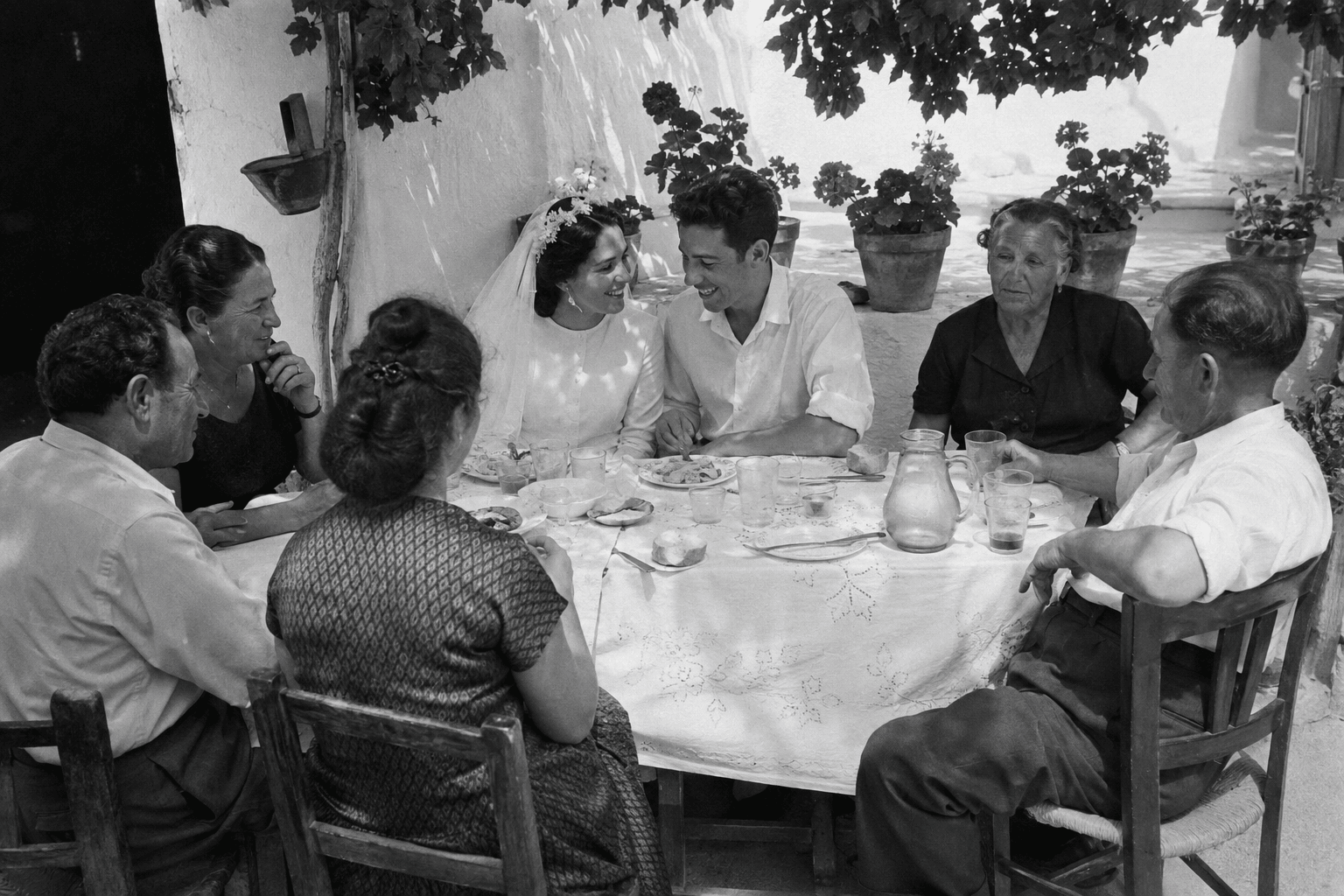
I’m working on my own family archive: finding old records, connecting names and dates, and trying to make that history easier to explore and share. Geranium is the product I’m building around that work.
The research moves between very different things. A handwritten record might explain a relationship; a photograph might raise a question that only someone in the family can answer. I wanted those pieces to live together, with enough context to follow the story from one to another.
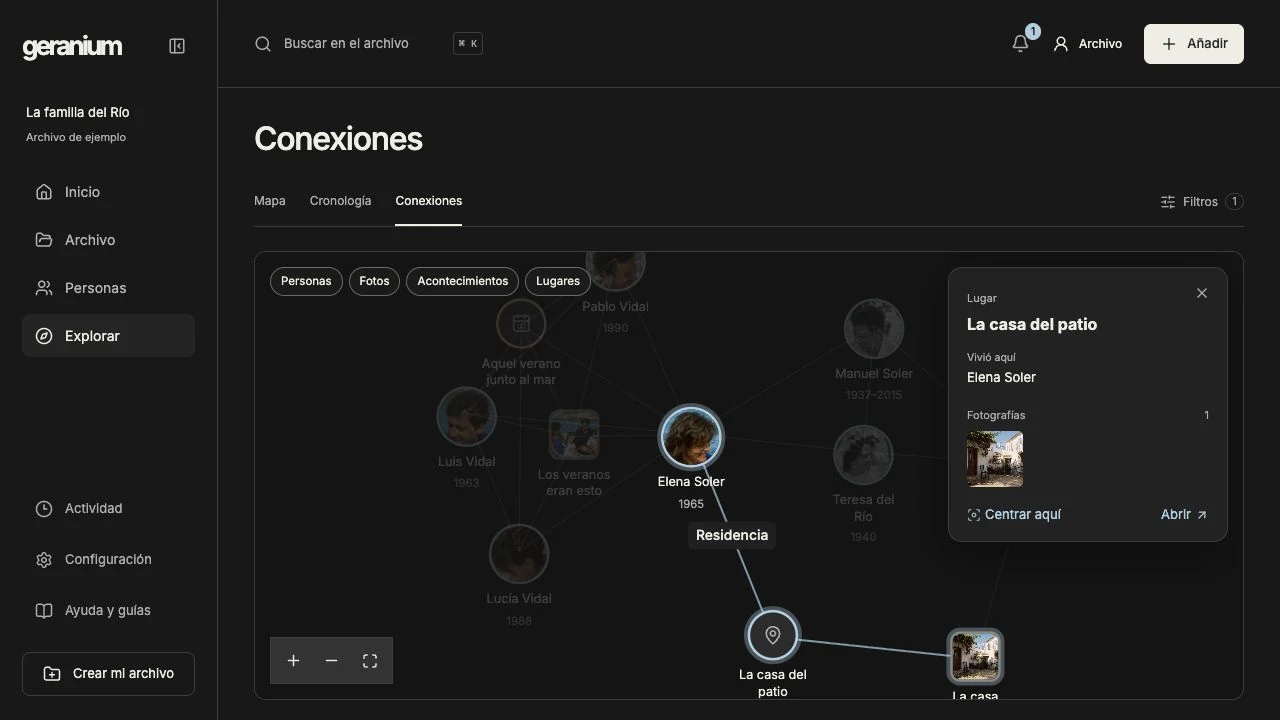
That led me to a connected archive of people, places, documents, photographs, stories and voices. I can start from a person and find their records, or from a place and discover who lived there. The interface gives those connections a shape that my family can explore without knowing how the archive is organised underneath.
Using an agent in my own research made me think carefully about how contributions reach that archive. I can work through documents with Codex, then bring the text, sources and connections into Geranium. A compatible agent works through authorized tools; my family works through the interface. Both need the same records to make sense.
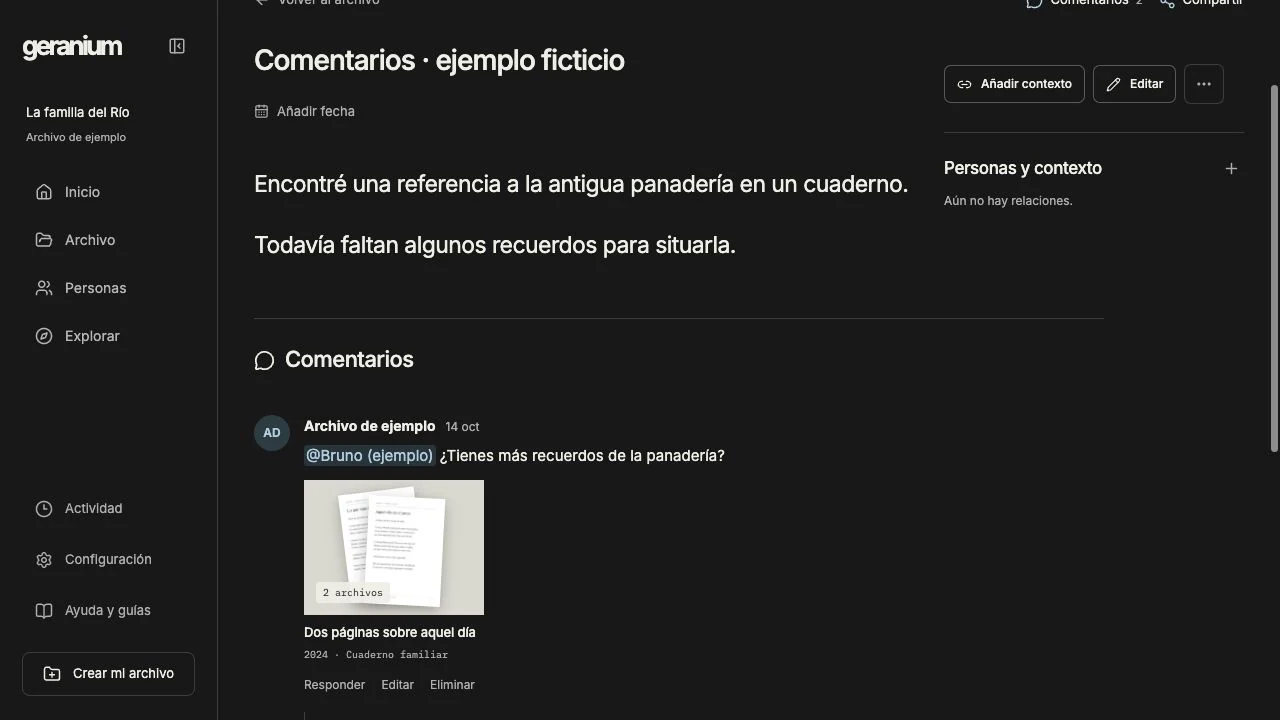
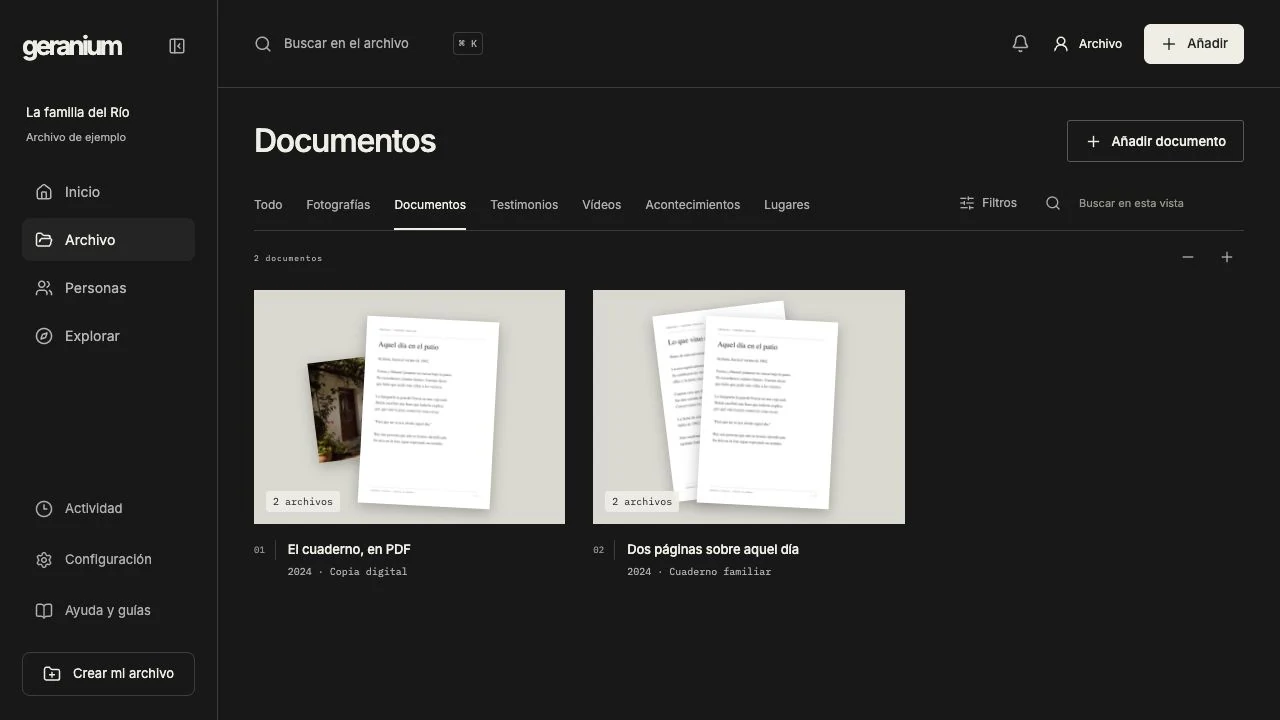
Most of the interface is for that human side of the experience: recognising a document from its preview, browsing someone’s life, opening an original, or asking a relative about a detail. Comments are one example. A question can stay beside the record, with a mention or a linked document to help someone else pick up the thread.
I want that context to last. Originals remain available, dates can be approximate, and differing accounts can coexist. Automatic OCR and transcription help with uploads through the app; when an agent contributes, it supplies the text and context itself. The purpose is to make the material easier to use while keeping the evidence close.
My work spans the information model, interface, application and agent access. Building and using it together keeps bringing me back to the same question: can someone else understand what I’ve added and carry it further?
I wrote more about the research behind the product in Building for people and their agents.
The hypothesisI want my family to be able to explore what we know, ask about what is missing, and keep adding to our history together.
The same archive for people and their agents
I share domain contracts between the interface and MCP tools. A compatible external agent can search and contribute with authorized access to a particular archive, explicit permissions and traceable changes.
Originals and context that stay together
I preserve original files, support approximate dates and differing accounts, and keep change history available. Exports carry the originals and their connections together.